👥More Than Milk: Marketing Genius of Amul🧩
Amul (Anand Milk Producers Union Limited) is an Indian dairy cooperative society managed by the Gujarat Cooperative Milk Marketing Federation Ltd. (GCMMF). It’s one of the world’s largest dairy cooperatives and a iconic Indian brand. Its STP strategy is deeply rooted in its cooperative structure, which influences every aspect of its marketing.
1. SEGMENTATION🧭:
Segmentation is the process of dividing a broad market into distinct subgroups of consumers with common needs, characteristics, or behaviors. Combination of segmentation bases are:
A. Geographic Segmentation:
Amul segments the entire Indian market, from metros to tier-2 and tier-3 cities and rural areas.
B. Demographic Segmentation:
Targets all income groups. Their products are priced to be accessible to the masses. They also target all age groups.
C. Psychographic Segmentation:
Targets consumers who seek value for money and trust a reliable brand. Segments consumers who value nutrition, quality, and purity. Amul’s communication often highlights the nutritional value of its products (e.g., “Amul – The Taste of India” also implies trust and purity).
D. Behavioral Segmentation:
Amul segments consumers by key benefits—health, indulgence, and convenience—while strategically serving both occasional light users and daily heavy users to maximize its market reach.
2. TARGETING🔑:
Targeting involves evaluating the segments and deciding which ones to serve. Amul employs a Differentiated Marketing Strategy, targeting multiple segments with specific products and marketing mixes.
Mass Market (Primary Target): The core target is the Indian middle-class family. Amul’s foundational products like milk, butter, and curd are aimed at this vast segment, emphasizing affordability, daily nutrition, and trust.
Children & Youth: Specifically targeted with fun, tasty products like ice creams, flavored milk, and chocolates. The branding is vibrant and appealing to this group.
Health-Conscious Urban Consumers: Targeted with specialized products like sugar-free yogurt, probiotic drinks, and lite butter.
Institutional Customers: A significant target includes restaurants, pizza chains, cafes, and bakeries, which are supplied with industrial-sized packs of cheese, butter, and cream.
3. POSITIONING🔍:
Positioning is about creating a distinct image and identity for the brand in the minds of the target customers relative to competitors.
“For all Indians, Amul is the dairy brand that offers the purest, most affordable, and highest-quality dairy products, making it the most trusted taste of India.”
Key Elements of Amul’s Positioning:
“The Taste of India”: This is their iconic tagline. It positions Amul as a national, patriotic brand that is intrinsically woven into the fabric of Indian culture and cuisine.
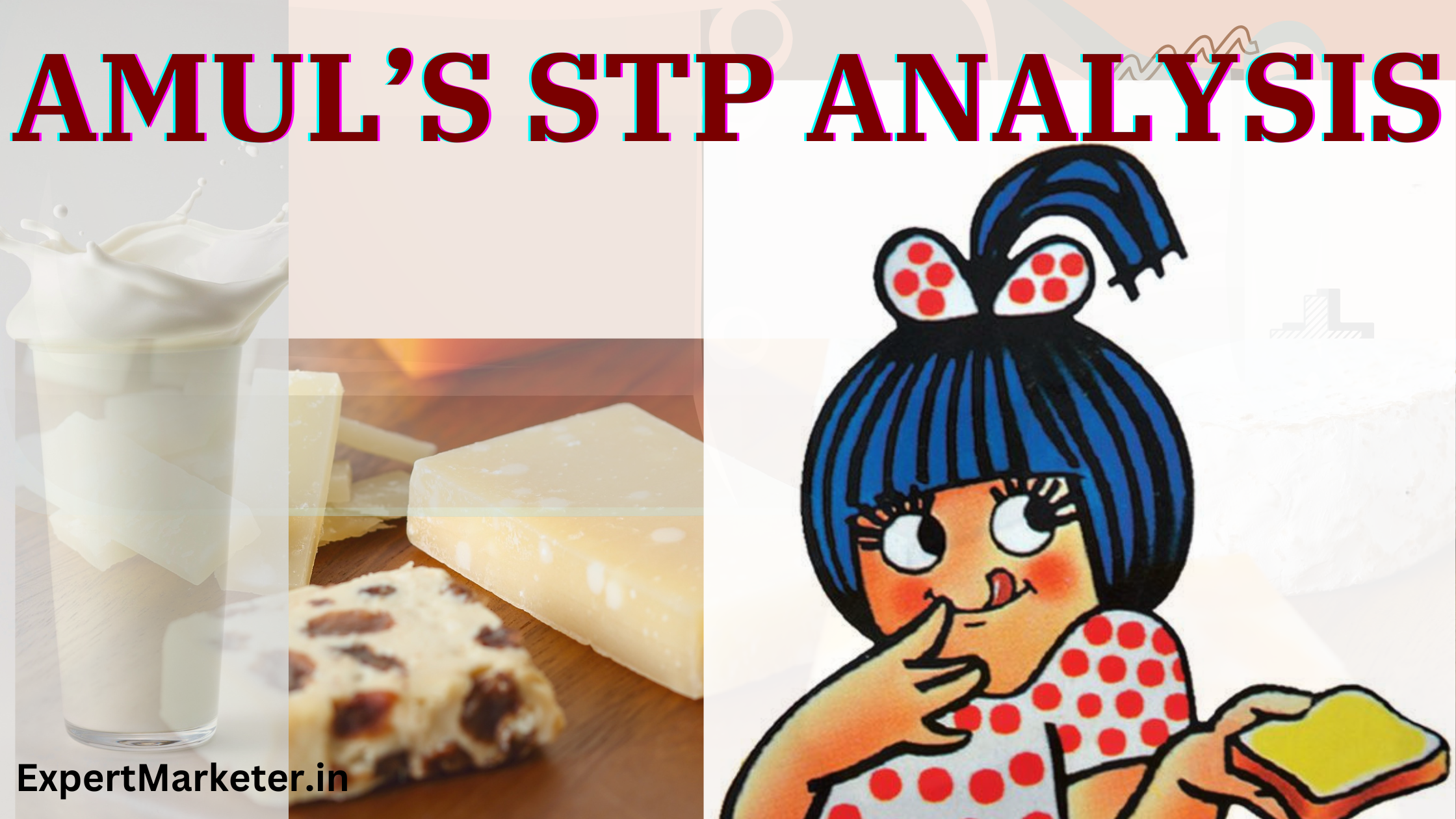
The Utterly Butterly Delicious Girl: The Amul moppet is a masterstroke of positioning. She makes the brand feel familiar, witty, and contemporary. By commenting on current events, she keeps the brand relevant and top-of-mind across generations.
Trust & Purity: The cooperative model (“owned by millions of farmers”) positions Amul as a brand that is not just profit driven. This builds immense trust regarding the purity and quality of the products.
Affordability: Amul is positioned as a brand for the common man. It is accessible to every Indian household.
4. DIFFERENTIATION💡:
Differentiation is the act of designing a set of meaningful differences to distinguish the brand from competitors. Amul’s differentiation is robust and difficult for competitors to replicate.
Amul’s differentiation stems from its unique farmer-owned cooperative model that builds unparalleled consumer trust. This foundation supports an unmatched distribution network and a vast product portfolio, making it a one-stop shop for dairy needs. The brand is further elevated by its iconic “Amul Girl” marketing and aggressive value-for-money pricing, creating an unbeatable competitive edge in the Indian market.
CONCLUSION:
Amul’s STP and Differentiation strategy is a classic case study of a brand built on a fundamentally strong and unique model (the cooperative).
- Segment the diverse Indian market intelligently.
- Target multiple segments without diluting its core value proposition.
- Position itself as the trusted, patriotic “Taste of India.”
- Differentiate on dimensions that are deeply embedded in its structure (the cooperative model, distribution) and culture (the Amul girl), making its competitive advantage exceptionally durable.







Post Comment